

Menu
How To Restore Your Yard Fast After Stump Grinding:
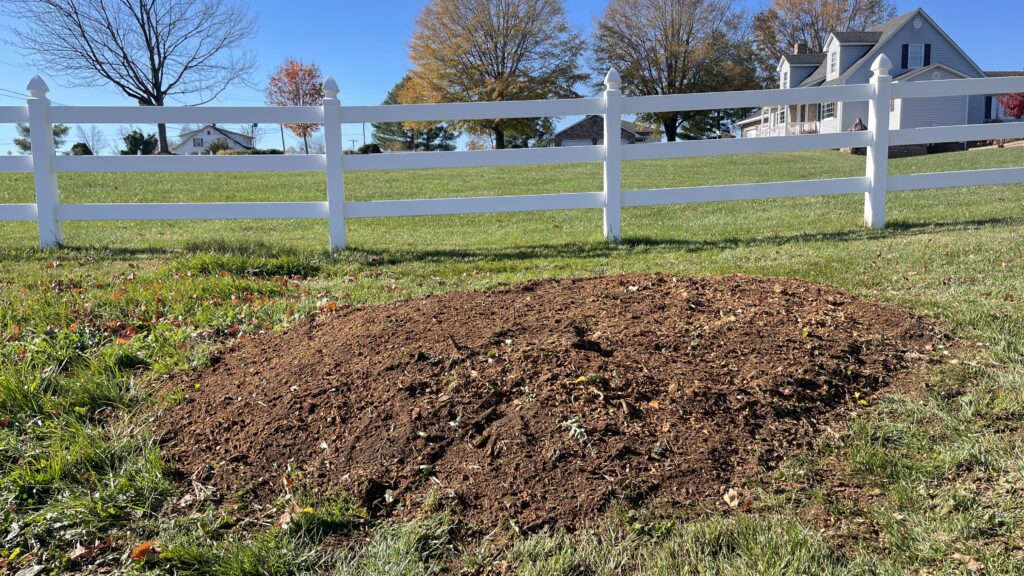
Rake out the leftover mulch, [which can be repurposed to go in flowerbeds, around trees in landscape or gardens.] fill the area with quality topsoil, and lightly tamp it down. This gives you a smooth, level surface that blends into the rest of your yard and helps prevent settling.
Best Way to Grow Grass Over a Freshly Ground Stump:
Spread a thick layer of topsoil, apply high-germination grass seed, cover lightly with straw or peat moss, and keep it consistently watered for 10–14 days. This helps the area re-establish quickly and match surrounding turf.
What to Expect as the Stump Decomposes Underground:
Even after grinding, roots will naturally break down over time. Mild settling is normal. Simply add more topsoil if the area dips. This keeps your lawn level and prevents water pooling.
Avoid Pest and Fungus Issues After Stump Removal:
Removing excess wood chips and adding fresh soil reduces moisture build-up and minimizes the chance of attracting insects or mushrooms. A clean, well-prepared area gives you the healthiest regrowth.
How to Prevent Sinkholes and Keep Your Yard Safe Post-Grinding:
Check the spot every few weeks during the first season. If the area settles, top it with fresh soil and reseed. Regular touch-ups keep your lawn safe, smooth, and fully restored after stump grinding.
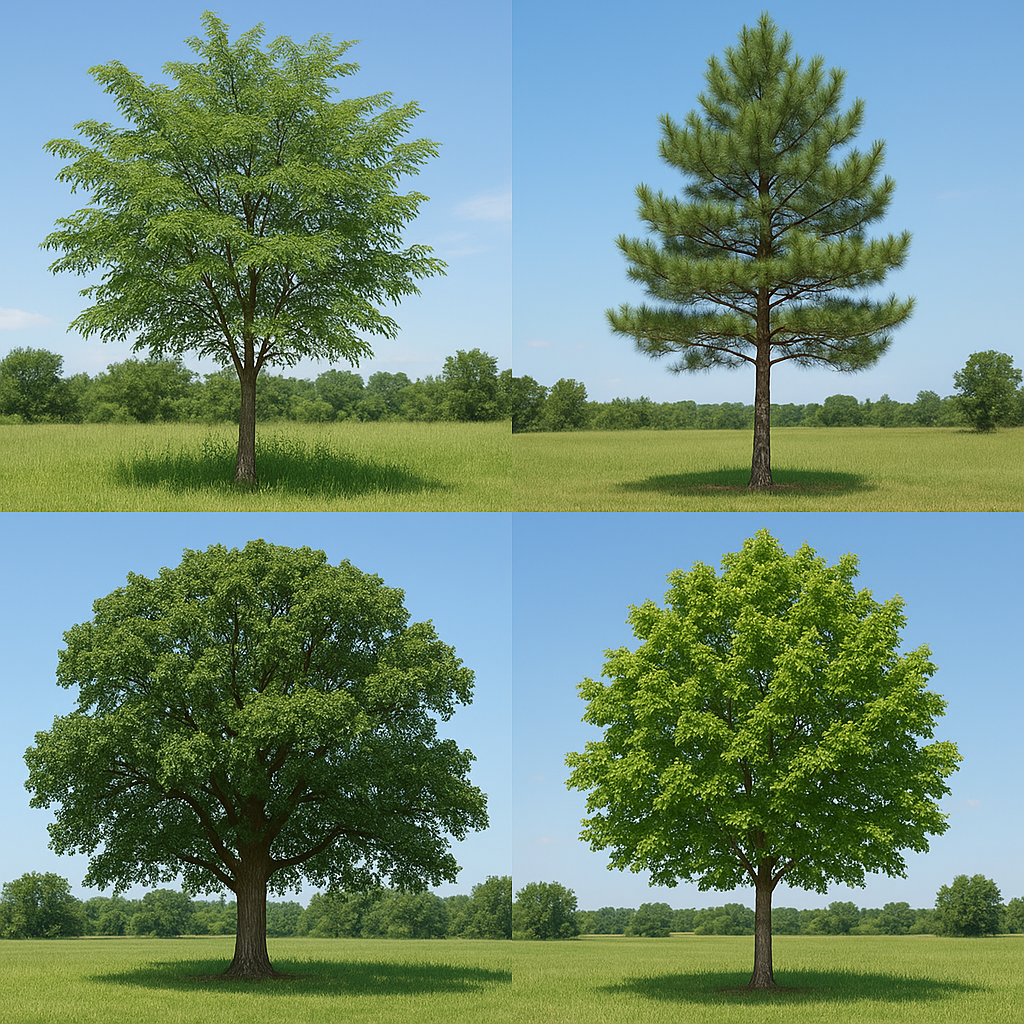
Oak Trees:
Known for their hard wood, oak stumps are particularly tough and require powerful grinding equipment to remove.
Maple Trees:
The dense root systems of maple trees can make stump grinding more complex and time-consuming.
Pine Trees:
While easier to grind, pine stumps often leave behind a lot of sticky resin, making cleanup more challenging.
Black Walnut Trees:
These trees are highly resistant to decay, which means their stumps remain solid for a long time and are difficult to grind.
Locust Trees:
The hard wood and deep root systems of locust trees make stump grinding a demanding task that often requires professional assistance.
Stumps left behind can attract pests, cause tripping hazards, spread disease to nearby trees, and even sprout new growth. Beyond those issues, they also reduce the visual appeal of your yard. Grinding them down prevents future problems and keeps your property looking clean.
Use a tape measure to record the stump’s widest diameter and its height from ground level. Be sure to note any root flares at the base and take a few photos from different angles. This info helps us provide a ballpark estimate before visiting your property.
Stump grinding leaves behind wood chips that can be repurposed as mulch, hauled away, or left to break down naturally. Many homeowners choose to recycle them in garden beds to help retain moisture and control weeds.
Yes — though some species require more effort than others, Beaveroo has the equipment and experience to handle all common Shenandoah Valley tree species. No stump is to large.
We recommend removing the mulch filling the hole with topsoil and reseeding it with grass or laying sod. You can also use the cleared space for new landscaping or planting. Just give the soil some time to settle and regain nutrients before planting another tree.